Finding spray foam insulation in your loft can be worrying, particularly if you are trying to sell your home, remortgage or release equity. What may once have been presented as an energy-efficiency solution can become a significant consideration when a surveyor needs to inspect the roof structure.
This is why homeowners searching for spray foam removal near me are often looking for much more than someone who can simply take the foam out. The process can involve identifying the type of foam, assessing the timber, removing the foam safely, sending the waste for disposal with the company having waste carriage licence, inspecting the exposed roof structure and making sure you are given the right information.
Spray foam Installed in your property is a potential barrier to selling your property because it can prevent normal inspection of the roof & timbers. It also highlights concerns surrounding ventilation, moisture and the requirements that can arise when a mortgage lender needs evidence that the roof has been properly assessed.
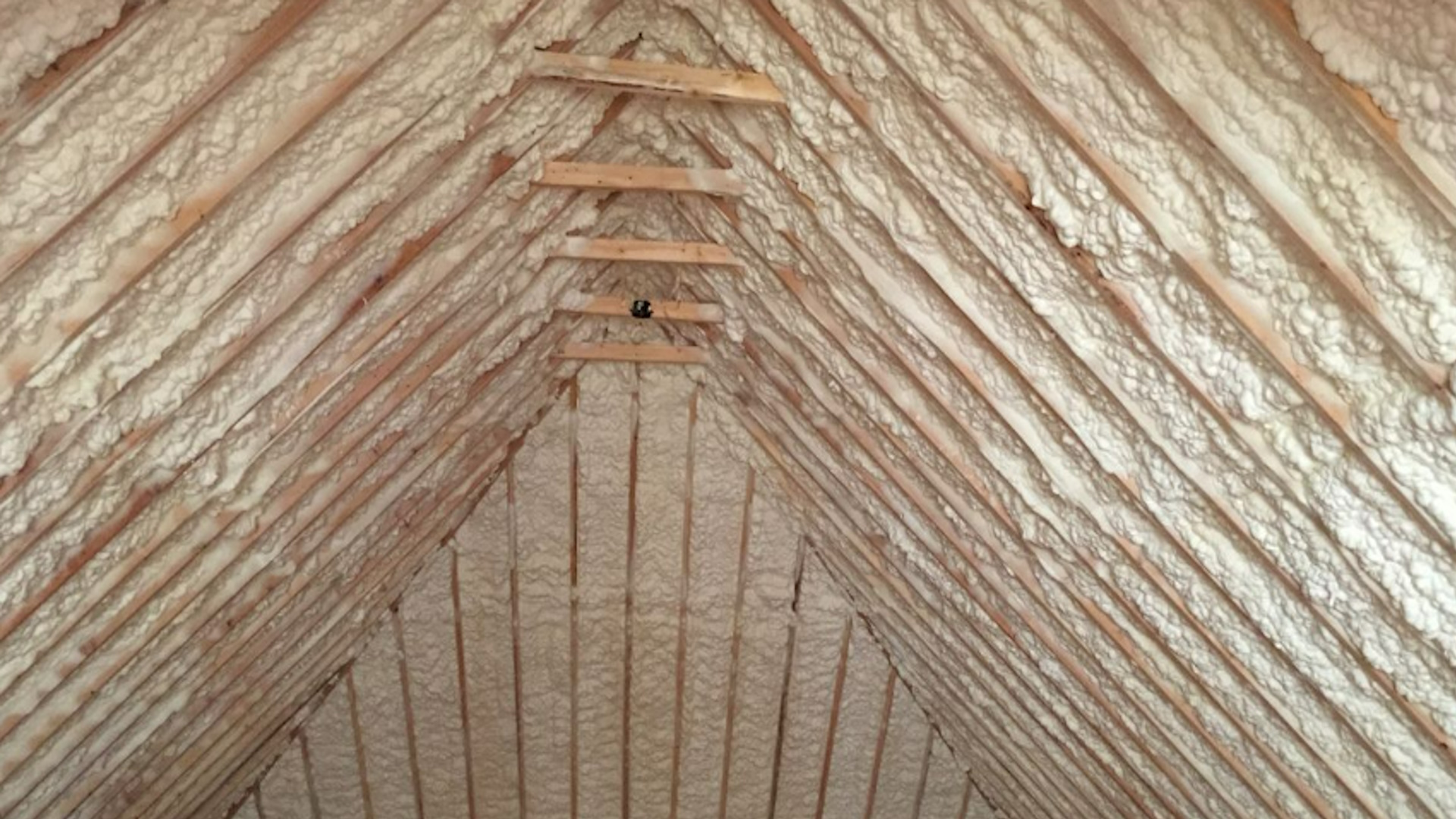
The Problems With Spray Foam Insulation
Spray foam creates a physical barrier between the roof timbers, roofing felt & roof tiles making it difficult to address any points of failure that are hidden and masked by the foam ie, water ingress, damaged felt or broken roof tiles.
Loft eaves that are blocked up with zero ventilation, moisture traps is another consideration. Its essential that venting is key in any loft space. This means the issue is not simply cosmetic.
Concerns can become particularly significant when a property is being sold or financed. UK mortgage lenders restrict or decline applications involving properties with spray foam insulation.
Open-Closed Cell Spray Foam: What Is the Difference?
Understanding whether your property has open-cell or closed-cell spray foam installed is important first step when considering spray foam removal. The two materials behave differently and can present different removal challenges.
Open-Cell Spray Foam
Open-cell foam is lightweight and feels like polystyrene product. it some what breathable, but it can behave like a sponge and hold moisture against roof timbers.It is generally easier to remove using hand tools than closed-cell foam.
Closed-Cell Spray Foam
Closed-cell foam is rigid, feels very hard its dense & bonds aggressively to any general roofing materia because of the strong super glue like bond, closed-cell is substantially more difficult to remove.
Spray Foam Removal How Long?
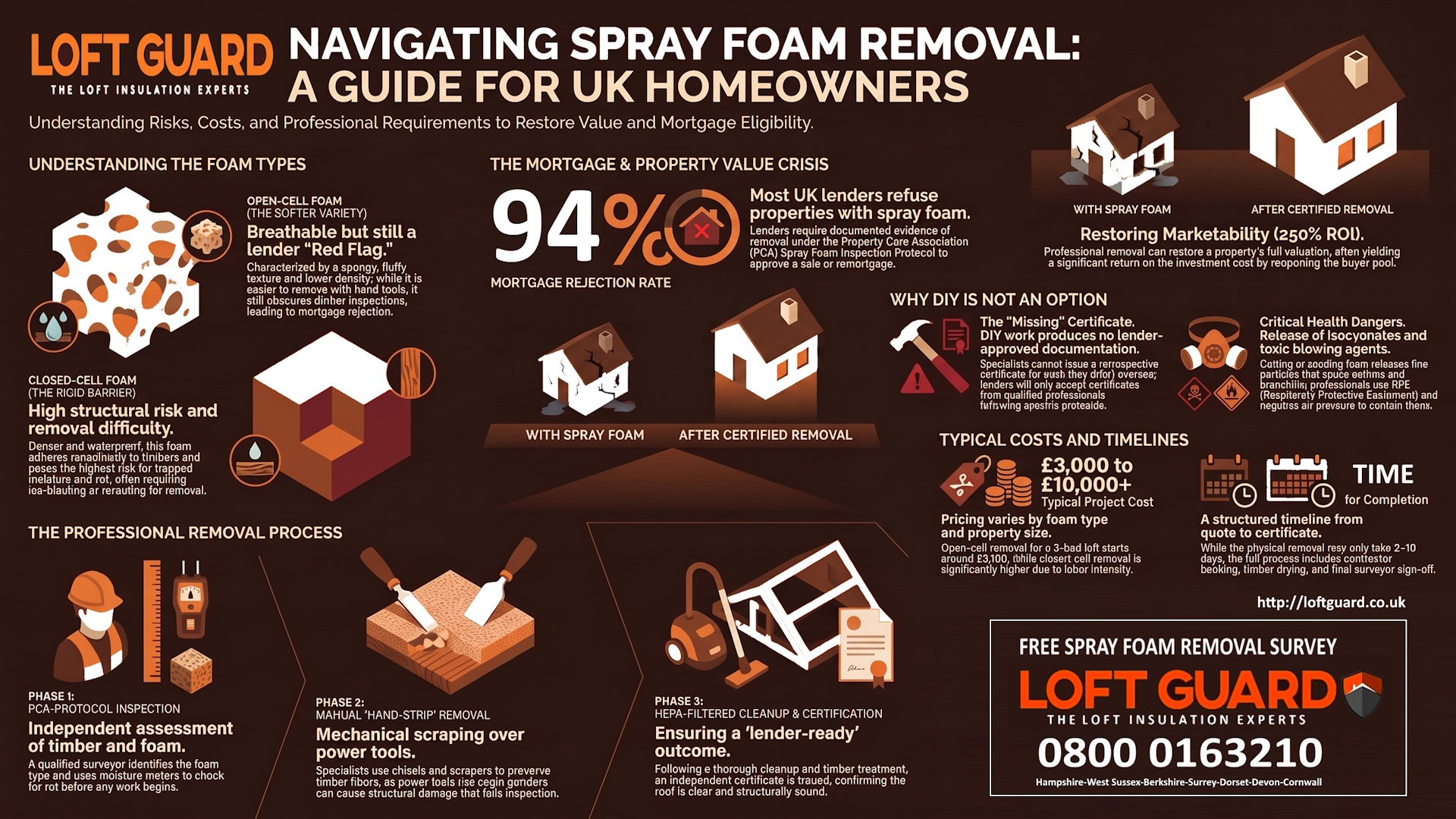
Professional spray foam removal is a staged process depending on size of the removal. The following times are approx, 2-4 days for open-cell. Closed-cell allow 2 to 4 weeks for complete re-roof repair.
DIY Spray Foam Removal
The DIY option removal is understandable. If a homeowner sees the costs of the work involved it can be tempting to buy few few tools have a go yourself there is lot work involved. Remember the standard spray foam removal can pile up as much as 150 industrial bin bags of lightweight foam outside your home. The waste carrier needs to be licenced as foam waste needs to be disposed of properly.
Spray Foam Removal Scams!.
Scam warnings are in place for UK homeowners about certain cowboy contractors that claim on first inspection a complete re-roof is necessary. Homeowners should seek clear evidence for any recommendations involving major roof replacement.Seek atleast 3/4 quotes

Cost of Spray Foam Removal?
The cost of spray foam removal varies according to the circumstances of the property. Removal is labour intensive depending on the type of foam installed.
Pricing examples of a small terraced house with soft-cell spray foam potentially starting from around £3,150 approx with the national average being around £9,200 for a typical semi-detached property with closed-cell removal is consistently around 20–60% more expensive. These costs are measured on square meterage of your property.
Documentation You Be Need After Removal?
For homeowners dealing with a mortgage or property sale, The removal company will supply certifcate of removal for you to present to morgage lender etc.
If your search for spray foam removal near me has started because a mortgage lender, surveyor or buyer has raised an issue, make documentation part of your initial conversation with any contractor.
Spray Foam Removal Contractors
When comparing contractors, consider whether they can clearly explain:
- Which type of spray foam is present.
- How the roof timbers will be assessed before removal.
- How dust and debris will be controlled & waste disposal.
- What removal method will be used.
- How the exposed timber will be inspected.
- What happens if moisture or timber deterioration is discovered.
- What documentation will be provided following completion.
- How the quotation has been calculated.
A good contractor should also be prepared to explain the process in plain English.
Loft Guard provides a specialist approach to spray foam removal, beginning with a free, no-obligation survey. According to the supplied source, this assessment is intended to identify the foam type and look for signs of moisture-related timber stress before the removal process is undertaken.
FAQ -About Spray Foam Removal
Why can spray foam insulation cause problems when selling a property?
Spray foam can make it difficult for a surveyor to inspect roof timbers for problems such as rot or water ingress.Mortgage lenders may restrict or decline lending on affected properties.
What is open-cell spray foam?
Open-cell spray foam is lightweight and spongy. It is somewhat breathable but can retain moisture against timber if a roof leak occurs. It is generally easier to remove using hand tools.
What is closed-cell spray foam?
Closed-cell spray foam is rigid and dense. It acts as a vapour barrier and bonds strongly to timber, roof tiles making removal more difficult than open-cell foam.
How long can professional spray foam removal take?
The supplied material describes the overall process as approximately four to eight weeks from the initial survey through to final lender-ready certification.
How is spray foam removed?
The principal methods for removing closed-cell & open-cell are using various hand tools that help to release the foam from the timbers & roof felt. Dry ice blasting is good alternative in the right work environment.
Why is a contractor survey important
The survey identifies the foam type and assesses the timber condition. This helps establish the work required and provides a basis for a transparent quote.
What happens to the roof timbers after the foam is removed?
Once exposed, the timbers can be inspected and tested for moisture usual readings from 9% to 14% indicate healthy rafters above 20% indicates warning sign & may require treatment before certification.
Should I remove spray foam myself?
We strongly advise against DIY removal because attempts can damage rafters and may leave the homeowner without the independent documentation required by lenders.
How much does spray foam removal cost?
Approx £3,150 as a possible starting point for a small terraced property with soft-cell foam and approximately £9,200 as a national average for a typical semi-detached property with closed-cell foam can be up to 60% more expensive plus Individual costs depend on the size of the property and work required.
Can spray foam removal help with mortgage concerns?
The source explains that lenders may require evidence that the foam has been properly removed and that the roof structure has not been damaged. Appropriate independent documentation can therefore form an important part of addressing mortgage concerns.
Spray Foam Removal Near Me Conclusion
If you have discovered spray foam in your loft, the best starting point is to establish exactly what you are dealing with. The type of foam, its relationship with the roof timbers and the reason for its removal.
A professional assessment provides a clearer route forward. It allows the foam to be identified, the timber to be considered and the likely removal requirements to be explained before the work begins.
Homeowners across areas including Hampshire, Surrey, West Sussex, Berkshire, East Dorset and Devon can contact Loft Guard to discuss their circumstances and arrange an assessment where appropriate.
Spray foam removal is a significant undertaking, but the objective is complete removal of Open-cell and closed-cell foam both types present different removal challenges. For homeowners affected by mortgage lenders or have inspection concerns. The right contractor will remove the foam & provide the right documention.
Open-cell and closed-cell foam present different removal challenges. Closed-cell material can be particularly difficult because of the strength of its bond to timber. Whatever type is present, careful removal is preferable to an approach that risks damaging the roof structure.
Loft Guard offer a free survey detailed report
Loft Guard take a professional approach to spray foam removal, starting with a free, no-obligation survey to assess the loft, identify the foam type and consider the condition of the roof timbers & covering every base.
Visit Loft Guard Here: